
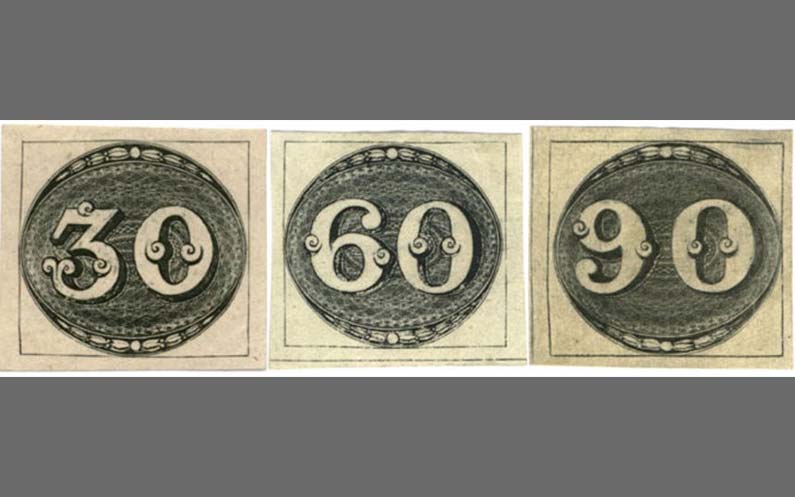
Brazil's philatelic history began in 1843 with the issuance of its first postage stamps, a distinctive set collectively known as the "Bull's Eye" stamps. These pioneering issues, predating many other nations' postal services, marked a significant step in global philately. The name "Bull's Eye" derives from their unique design: a large, centrally placed numeral indicating the denomination, surrounded by an oval border, giving them the appearance of an ox's eye. Printed in three denominations – 30, 60, and 90 reis – these stamps were simple yet elegant, eschewing elaborate imagery in favor of a clear, functional design. Their stark simplicity, however, belies their immense historical and philatelic importance.
 The "Bull's Eye" stamps were printed by the Brazilian Mint in Rio de Janeiro using a typographic process. The absence of the emperor's effigy, a common feature on many early stamps worldwide, was a deliberate choice by the Brazilian government. This decision was driven by concerns that the monarch's image might be defaced or obscured during postal transit, an outcome deemed disrespectful. Instead, the focus remained entirely on the numerical value, ensuring clarity and practicality. This early commitment to a functional design principle set a precedent for future Brazilian postal emissions and distinguished them from their international counterparts.
Today, the "Bull's Eye" stamps are highly prized by collectors worldwide, and are a cornerstone of any Brazilian collection. They are a testament to the nation's early adoption of a modern postal system. Their historical significance, along with their unique design and relative scarcity, makes them some of the most sought-after and valuable stamps in the world.
References
Brazil’s Bull’s Eyes by L. N. Williams
Identifying Brazil’s Bull’s Eyes corresponding plates can be fun
Wikipedia - Bull's Eye (postage stamp)
Notes From A Stamp Collector

Jamestown Exposition Issue: Commemorative Stamps of 1907
The 1907 Jamestown Exposition Issue stands as one of the most culturally significant and visually striking commemorative stamp series of the early 20th century. Released by the United States Post...

Iconic Country Stamps: French Guinea 1904 Fulah Shepherd
In the world of philately, French Guinea (now the Republic of Guinea) occupies a unique space within the "French West Africa" (AOF) collecting category. Unlike British Guiana, which has a single...

Iconic Country Stamps: China’s Famous Red Revenue Stamp (1897)
China has a few stamps that are considered incredibly famous and valuable, but one of the most consistently prized and historically significant is the Red Revenue stamp, particularly the "Small One...

Louisiana Purchase Exposition: Commemorative Series of the 1904 World’s Fair
The 1904 Louisiana Purchase Exposition Issue represents a pivotal moment in American philatelic history. Issued to celebrate the centennial of the Louisiana Purchase and to publicize the St. Louis...
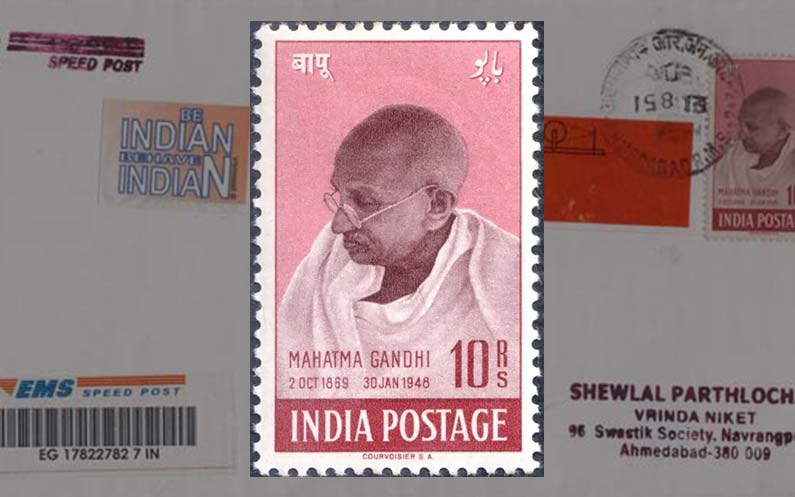
Iconic Country Stamps: India’s 10 Rupee Mahatma Gandhi
India's most famous and valuable postage stamp is undoubtedly the 10 Rupee Mahatma Gandhi stamp of 1948. This stamp, issued on the first anniversary of India's independence, holds a special place in...

The Pan-American Exposition Issue: A Commemorative of Progress and Tragedy
The Pan-American Exposition Issue is one of the most distinctive and historically significant series of United States commemorative postage stamps. Released in conjunction with the 1901 Pan-American...
Subscribe
newsletter
(503) 440-4441